
Protecting Our Forests (AND your home) from mountain pine beetles
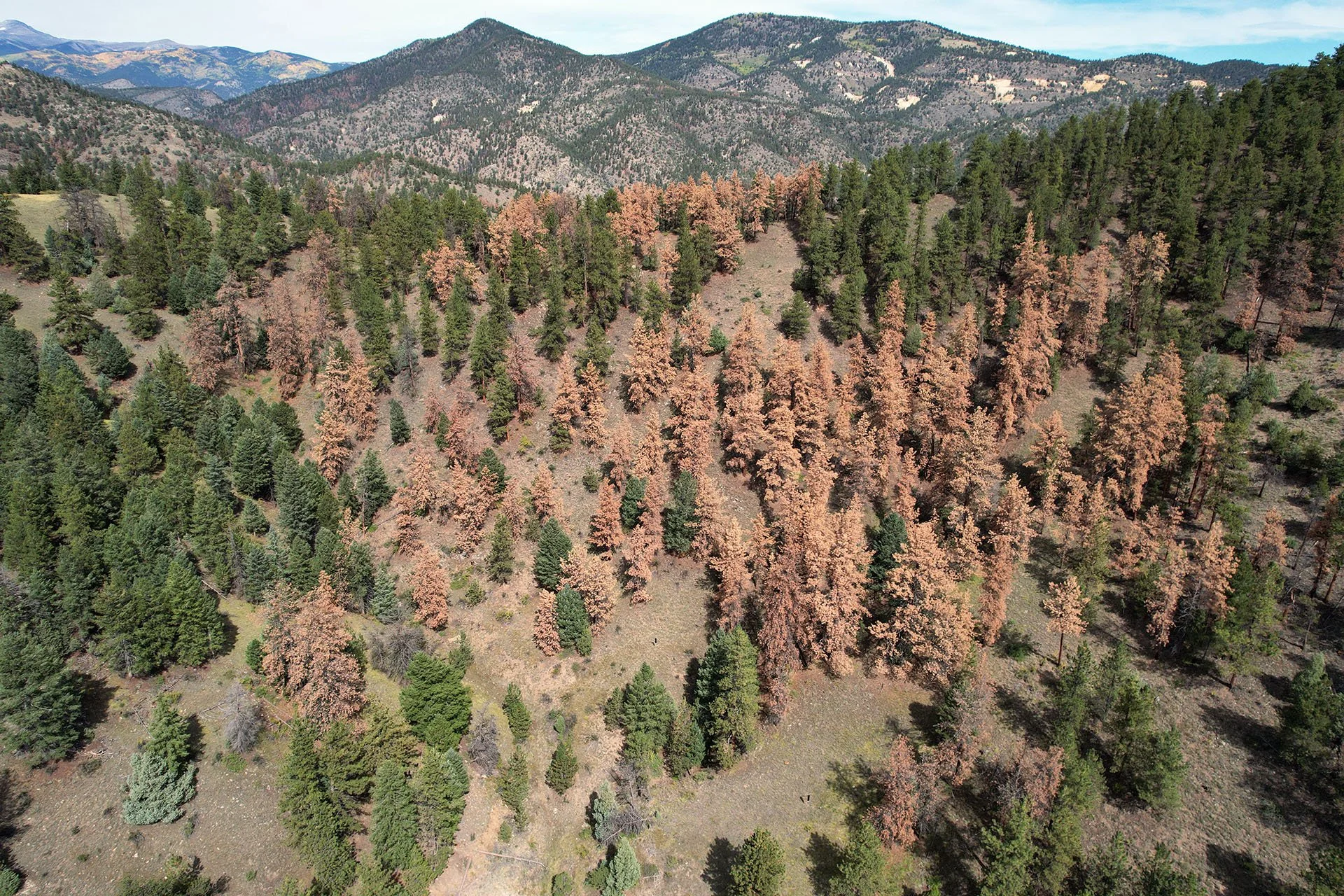
Mountain pine beetles are native to our area and play an important role in keeping forests healthy. However the Colorado State Forest Service, which tracks outbreaks across the state, has warned that infestations in Boulder’s Ponderosa pine forests are expected to intensify. Beetle-killed trees, with their dead, highly flammable needles increase the risk of wildfire spreading through treetops. The good news: there are practical steps you can take to protect your home and our community.
HOW TO SPOT AN INFESTED TREE:
Catching an infestation early makes a big difference. Keep an eye out for these common warning signs:
Small, popcorn-shaped blobs of sap on the trunk
Fine sawdust in bark crevices or around the base of the tree
Woodpeckers stripping bark as they search for beetle larvae
Tiny holes where adult beetles have emerged
Color change in needles
WHAT YOU CAN DO THIS SPRING:
Spring is the critical window for action. Mitigation should happen before adult beetles emerge in early summer (May/June). Here are effective steps you can take:
Remove and Properly Dispose of Infested Trees:Cut down infested trees promptly. Do not transport infested wood unless you take it directly to an approved disposal site, as moving it can spread beetles. Otherwise, trees must be removed, burned, chipped or debarked.
Solarization: (A good DIY option) Cut infested logs into 4–6 foot lengths, pile in a sunny area, and cover with 6-mil thick clear plastic. Then bury the edges with soil to create a greenhouse effect that kills the larvae.
Debarking: Removing the bark dries out the tree and kills larvae.
Firewood Management: If using infested wood as firewood, burn it before spring or store it under airtight plastic tarps.
FIND MORE RESOURCES:
